Last updated: 2026-08-03 · Written by the usedappliancestores.com data team. Store counts come from our national dataset of 6,671 active store listings, checked 2026-07-15.
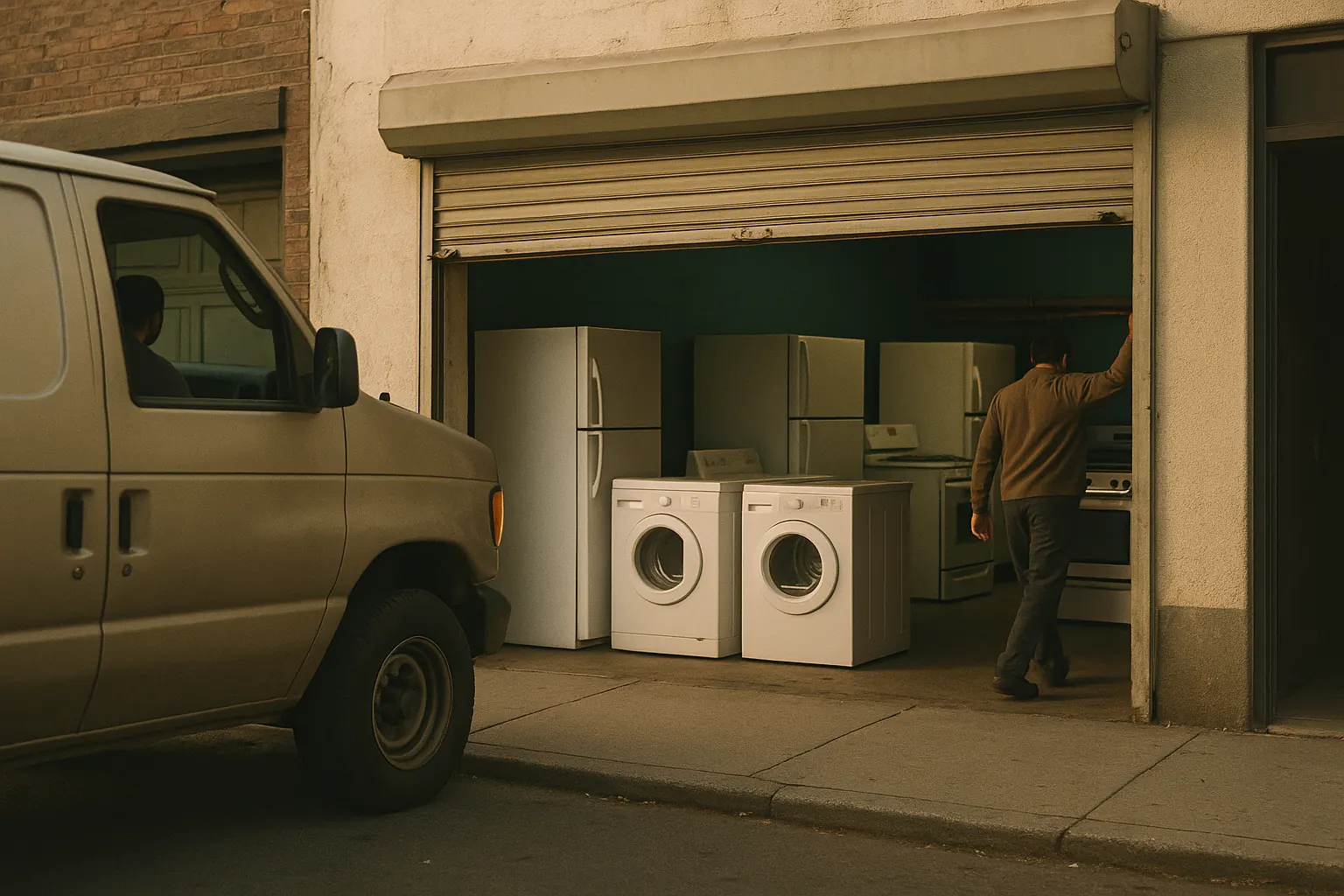
Eight channels sell used and discounted appliances in the United States, and they are not interchangeable: the price spread between them on the same machine runs 2x and the protection spread runs from a written 90-day guarantee to nothing at all. The short answer: an independent used-appliance dealer with a written guarantee is the strongest default for most buyers, marketplaces are the cheapest for buyers who can test and haul a machine themselves, and everything else wins in a specific situation named below. Here is the whole comparison in one table, then what each channel is actually like to buy from.
The eight channels, one table
| Channel | Typical price vs. new | Warranty | Delivery & haul-away | Can you test it first? | Recourse if it fails in a week |
|---|---|---|---|---|---|
| Independent used dealer | 30-60% | Written 30-90 day guarantee at reputable stores | Usually offered, $50-150 | Yes, on the floor | The written guarantee |
| Scratch-and-dent / outlet | 60-80% | Manufacturer coverage often survives; confirm in writing | Usually offered | Yes, and the unit is new inside | Manufacturer or store warranty |
| Nonprofit resale (ReStore-class) | 20-50% | Rarely; some test units | Rarely; bring a truck | Sometimes plug-in tested | Usually none; donations fund the mission |
| Big-box open-box / clearance | 70-85% | Retailer return window + possible manufacturer coverage | Standard retail delivery | Floor inspection only | Retailer return policy |
| Facebook Marketplace | 15-40% | None | None; you haul | If you ask; insist on it | None |
| Craigslist / OfferUp | 15-40% | None | None; you haul | If you ask; insist on it | None |
| Estate sales & auctions | 10-30% | None | None; you haul | Rarely powered | None |
| Rent-to-own clearance floors | Varies; pre-leased units below new | Short store warranty, sometimes | Usually offered | Yes | Store policy |
Two structural facts explain the table. Sellers with floors and registrations can test machines and honor paper, so their prices carry protection; sellers on marketplaces are priced below them precisely because nothing survives the handshake. And delivery is a real cost line, $50 to $150 with haul-away of the dead unit riding along, so a marketplace bargain plus truck rental plus your afternoon often lands within reach of a dealer's delivered price. The landed-cost arithmetic across channels is worked in full in cheapest way to replace a washer or dryer.
Independent used-appliance dealers: the strong default
The dedicated used dealer is the only channel whose whole business is the thing you are trying to buy: sourcing, testing, reconditioning, and standing behind used machines. The strong version gives you a tested unit, a manufacture-date answer from the rating plate, a written guarantee, and delivery with haul-away, which as a bundle beats every other channel for a buyer who wants the machine to just work.
The channel is also bigger than it looks from a search engine. Our national dataset holds 6,671 active stores across all 50 states and DC, and only 48.0% of them (3,199) have a live website (checked 2026-07-15), which means most of this channel is invisible online and found by phone, by directory, or by driving past. That invisibility is why marketplace listings feel like the whole used market when they are the thinnest-protected corner of it. Find the checked dealers near you on the browse checked stores by state, and run any store you find anywhere through how to verify a used-appliance store first; in our national screen, 29% of candidate stores failed basic identity or operating checks.
Scratch-and-dent outlets: new machines wearing discounts
The outlet channel sells new mechanics with cosmetic damage, 370 stores with scratch-and-dent evidence and 453 outlet-class stores in our dataset. For a buyer whose priority is warranty and lifespan rather than the lowest tag, this is usually the answer, and the full decision logic sits in is buying used or scratch-and-dent worth it with the discount factors in scratch-and-dent savings by brand and category. Browse the segment at scratch and dent and appliance outlets.
Nonprofit resale: the lottery with a mission
Habitat for Humanity ReStores and similar operations sell donated appliances cheap, and the donation pipeline means the floor changes weekly. Selection is pure luck, most units sell untested or lightly tested, and there is usually no recourse, which is the deal: your purchase funds the mission and your inspection replaces the warranty. Bring the checks from how to inspect a used appliance before buying, bring a truck, and treat any near-new unit as the found money it is.

The nonprofit floor: no warranty, no provenance, and every so often the buy of the year.
Marketplaces: cheapest tag, fullest risk
Facebook Marketplace, Craigslist, and OfferUp carry the lowest prices in the market because you absorb every function a store performs: testing, moving, and standing behind the machine. The channel works, on three conditions. Test the unit at the seller's home, running a full cycle, not a light flicked on. Bring help and a vehicle, because "you haul" means you, today, with straps (cheapest way to replace a washer or dryer covers moving a machine without wrecking it or your back). And pay in a way you can live with, because there is no recourse; the warranty framework in used-appliance warranty rights by state governs merchants, and a private seller is not one, which is why the same washer is $150 here and $300 with paper at a dealer. The $150 difference is the price of the paper.
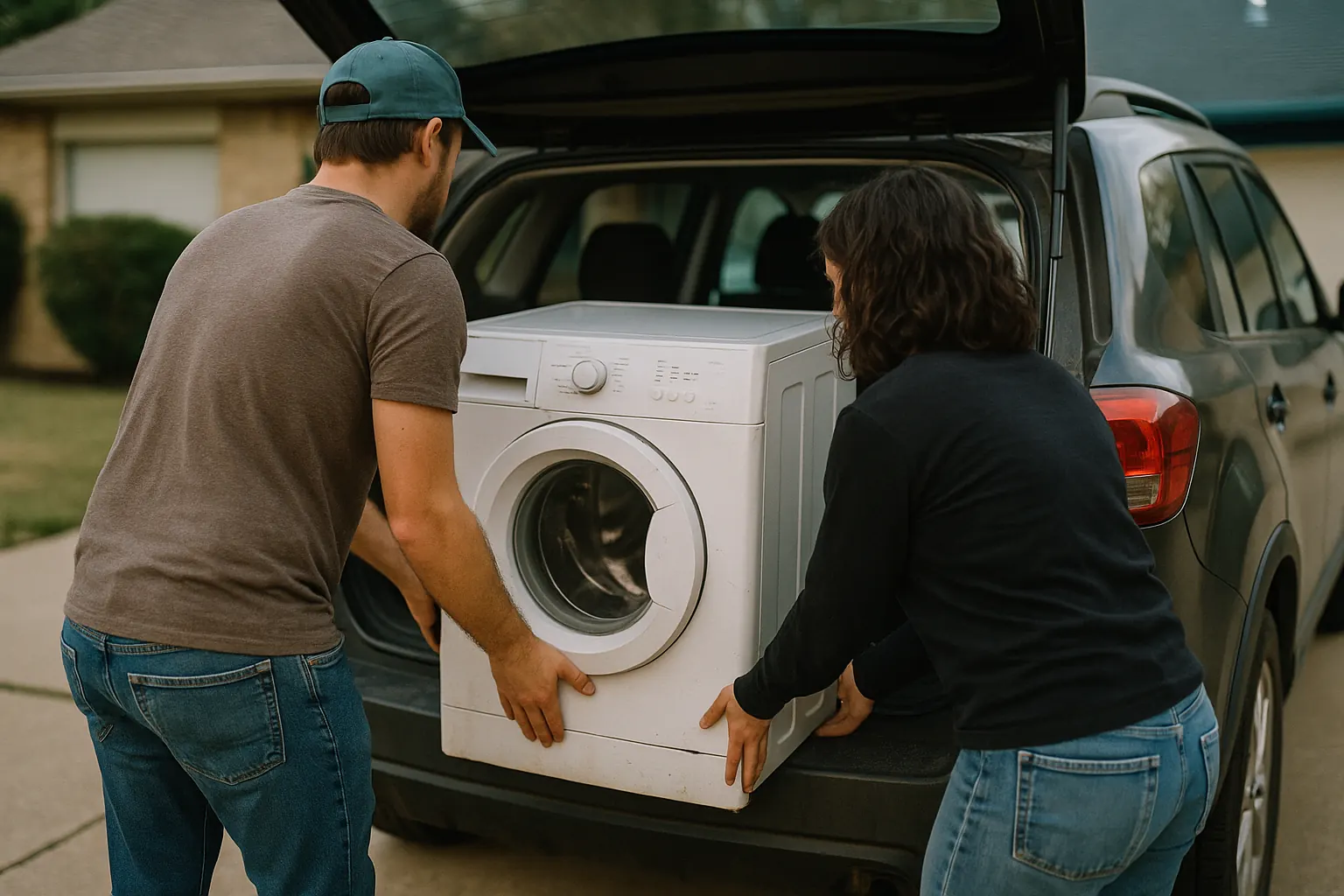
Marketplace pickup, honestly depicted: the discount includes the part where you are the delivery crew.
Big-box open-box: the return window is the product
The open-box shelf at a national retailer sells returns and display units at 70% to 85% of new, which is the smallest discount in the used market attached to its strongest paper: a retail return window, standard delivery, and often surviving manufacturer coverage. That combination suits exactly one buyer well: the one who wants near-new, will pay near-new, and values the ability to undo the purchase. The two checks that matter are inventory checks, not mechanical ones: what is still in the box (racks, hoses, cords, and kits leave at the first sale and do not always return), and when the manufacturer's warranty clock started, since some brands date coverage from the first retail sale. Both checks, and the floor-model variant with its display-duty wrinkle, are detailed in used vs. scratch-and-dent vs. refurbished vs. open-box. One more thing worth asking at the counter: open-box pricing is often negotiable in a way new pricing is not, because every week on the floor costs the store margin, and the discount that started at 15% quietly deepens for anyone who asks.
Estate sales and auctions: the dealer's own supply line
Estate clearances and storage auctions price appliances lowest of any channel, 10% to 30% of new, because they sell with zero testing, zero paper, and frequently zero power outlets in reach. This is the wholesale layer, the same pipeline dealers buy from (where do used appliance stores get their inventory maps it), and shopping it means doing the dealer's job yourself. The channel-specific risk is dormancy: a machine that sat unplugged in a garage for a year dries its gaskets and gums its valves, and those failures surface in week one of renewed daily duty. If you go: go early with cash and a truck, read manufacture dates off rating plates since age is the only fact available, favor simple machines (basic dryers and mechanical-knob ranges survive dormancy far better than french-door refrigerators), and price everything as untested because it is. One in three of these buys needs something within a month. The arithmetic still works when the entry price is a tenth of retail, but only if you priced the risk instead of the fantasy.
Rent-to-own clearance floors: the fine print is next door
RTO chains and regional operators sell their returned lease units through clearance floors, pre-leased machines below new price with a short store warranty. As a cash purchase, judged like any used purchase, the units can be fair value: young machines, professionally moved between homes, inspected on return. Two cautions travel with the channel. The first is the inspection: a walk-away unit spent its first life with a user who had a return option rather than an ownership stake, so the care history is genuinely unknown; run the full routine in how to inspect a used appliance before buying. The second is the doorway: the same counter sells the lease, and a buyer who came for a $300 clearance washer and leaves with a $25-a-week agreement has changed products entirely. That trade has a real price, 2 to 3 times retail over a full term per FTC guidance, and the complete math is in rent-to-own vs. buying used vs. financing. Buy the clearance unit with cash or not at all, and read that guide before any signature.
Timing: when each channel is cheapest
The used market has seasons, and they are the new market's seasons refracted:
- Marketplace supply peaks at moving season (late spring through early fall in most metros, and month-end always): sellers racing a lease deadline price to disappear today. The same weeks are when free-curb units appear.
- Outlet and scratch-and-dent stock surges after new-model rollouts (typically fall for kitchen, spring for laundry) and after big-box holiday events, when the returns wave lands. The two weeks after a major sale weekend are the open-box shelf at its deepest.
- Dealers restock continuously but discount at quarter ends and in January, when floors are full and traffic is thin. January is quietly the strongest month to buy used laundry from a dealer.
- Estate-sale volume follows spring cleanouts; auctions run year-round.
None of this justifies waiting through a dead refrigerator, and the laundromat meter in cheapest way to replace a washer or dryer prices what waiting costs on laundry. But a non-emergency upgrade bought in the right two weeks routinely saves another 20%.
Which channel fits which buyer?
| Your situation | The channel |
|---|---|
| Want it to work, want paper, normal budget | Independent dealer, written guarantee |
| Warranty matters most, budget above used prices | Scratch-and-dent or outlet |
| Lowest cash outlay, you can test and haul | Marketplace, tested at the seller's home |
| Replacing everything after a move, luck acceptable | Nonprofit resale, repeated visits |
| Near-new only, return window wanted | Big-box open-box |
| No cash and no credit this month | The routes in buying appliances with bad credit |
One rule spans all eight rows: the machine gets inspected before money moves, everywhere, every time. The dealer's guarantee makes a failed check survivable and the marketplace's price makes it expensive, but the ten minutes are the same, and they are in how to inspect a used appliance before buying.
Sources
- usedappliancestores.com store dataset, 2026-07-15 build: 6,671 active listings; segment, website-coverage, and screening-funnel figures.
- Price-versus-new bands: computed from the remaining-life formula and typical posted prices per channel structure (used-appliance prices by type and region carries the formula); stated as working bands, not survey data.
- Federal Trade Commission consumer guidance on rent-to-own; CFPB buy-now-pay-later descriptions (for the financing-adjacent rows).