Last updated: 2026-08-03 · Written by the usedappliancestores.com data team. Store data comes from our national dataset of 6,671 active listings, checked 2026-07-15.
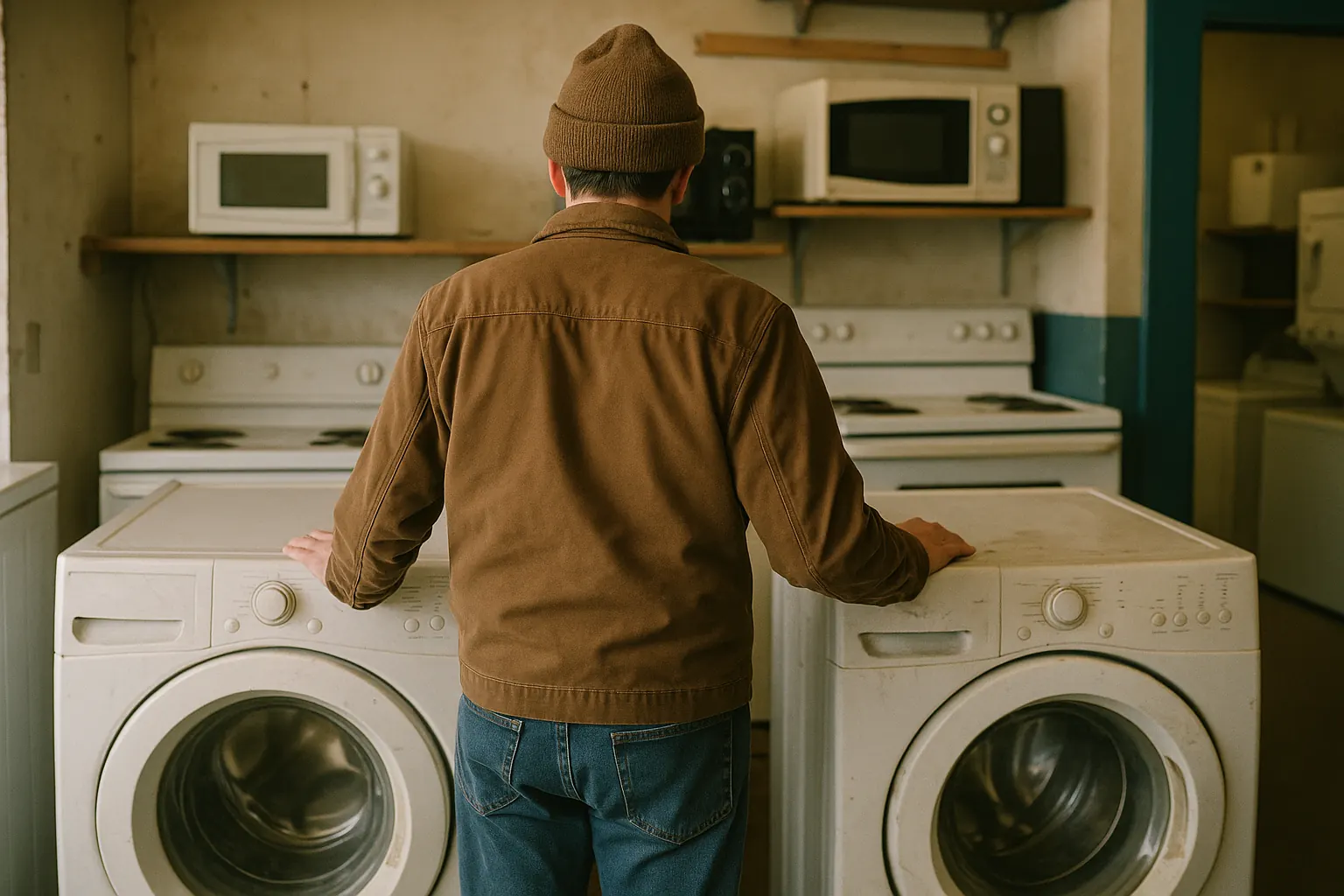
Scratch-and-dent is worth it in most cases: the mechanics are new, so you carry cosmetic damage, not lifespan risk. Used is worth it when the price is low relative to the appliance's remaining expected life, which you can estimate from the model's age. The break-even logic below is the same for both; the risk profile is not, and the difference between the two purchases is the difference between confirming a dent is only a dent and estimating how much machine is left.
The one calculation that decides it
An appliance is a machine with a finite service life. The most-cited public dataset, the National Association of Home Builders' Study of Life Expectancy of Home Components (2007), gives these expected lifespans:
| Appliance | Expected lifespan (NAHB 2007) | A 5-year-old unit has roughly |
|---|---|---|
| Dishwasher | ~9 years | ~44% of its life left |
| Washing machine | ~10 years | ~50% of its life left |
| Freezer | ~11 years | ~55% of its life left |
| Refrigerator | ~13 years | ~62% of its life left |
| Dryer | ~13 years | ~62% of its life left |
| Electric range | ~13 years | ~62% of its life left |
| Gas range | ~15 years | ~67% of its life left |
The test: price as a fraction of new should be at or below remaining life as a fraction of total. A 5-year-old washer has about half its expected life left, so paying less than half the new price is rational and paying 70% of the new price is not. The lifespan figures are averages from a 2007 study, so treat them as a planning baseline, not a guarantee; usage intensity and maintenance move individual units in both directions.
Run it in dollars-per-year and the fog clears further. A $300 used washer with five expected years left costs $60 a year of service. A $600 new one with ten years costs the same $60 a year, plus a manufacturer warranty and delivery. A $250 unit with two years left costs $125 a year, which makes the "cheap" machine the most expensive thing on the floor. The tag price answers "what do I pay today." The per-year number answers "what does this machine actually cost," and it is the only number that lets you compare a used unit, a scratch-and-dent unit, and a new one on the same line.
Why scratch-and-dent is the stronger deal on paper
A scratch-and-dent unit has 100% of its expected life left. You are paying a discount for cosmetics, not for consumed lifespan. That inverts the risk question: instead of estimating remaining life, you only need to confirm two things.
- The damage is actually cosmetic. A dented side panel is cosmetic. A bent door frame, a damaged gasket, or a dent over the compressor or drum housing is not. Inspect the unit running if the store allows it, and run a level across the top; a unit that does not sit flat took a hit that went past the skin.
- The warranty status is stated in writing. Manufacturer coverage often survives on scratch-and-dent units, but practices vary by brand and by how the unit left the original retail channel. A store's verbal "still under warranty" is not a document.
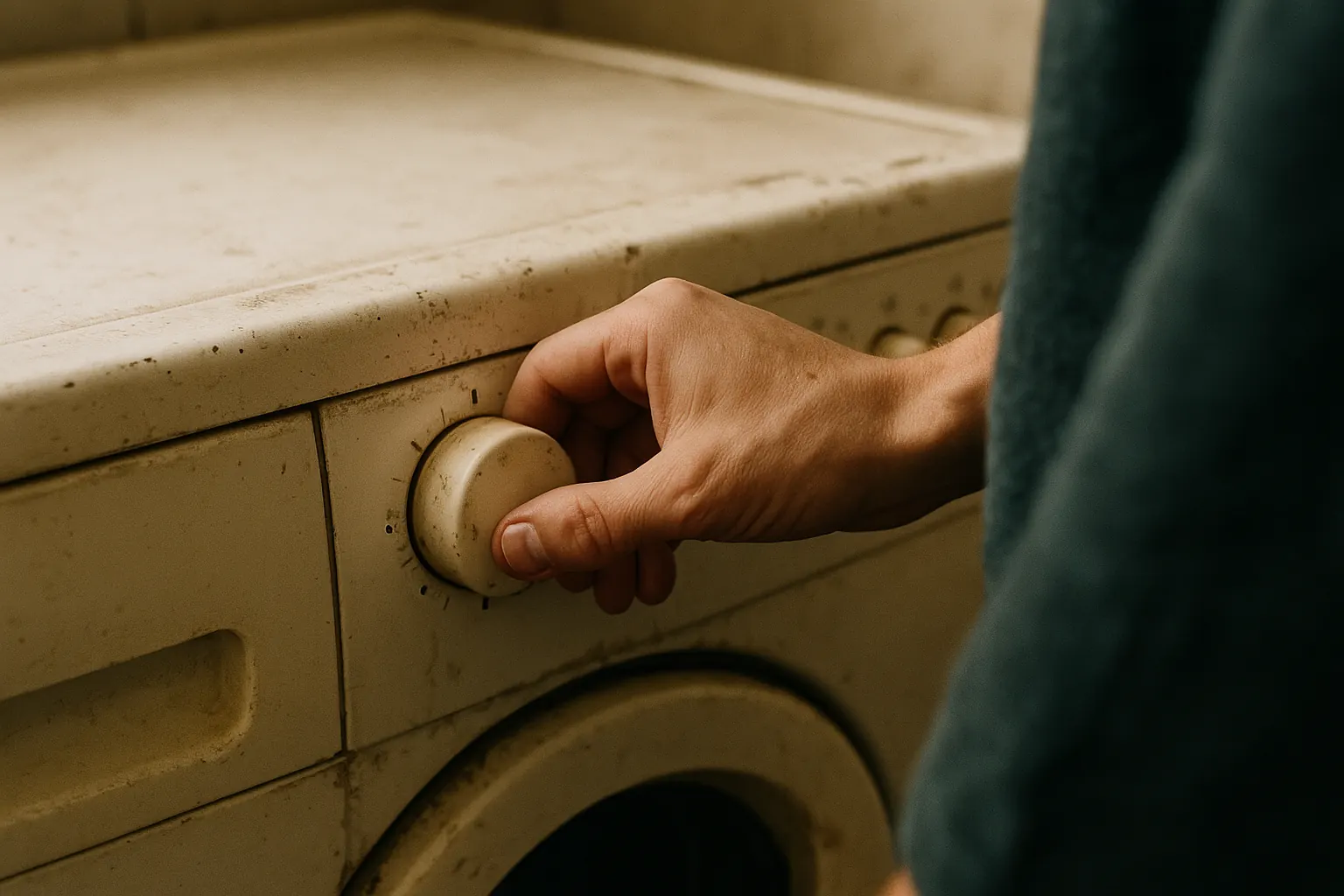
Ask to run the machine. A store that sells working appliances lets you watch them work; a store that will not has answered a different question.
370 of the 6,671 stores in our directory show positive evidence of selling scratch-and-dent inventory (scratch and dent), against 1,987 with evidence of used inventory, which makes scratch-and-dent the scarcer find. Search demand runs the other way: "scratch and dent appliances near me" draws about 27,100 US queries a month (DataForSEO, Google Ads data, 2026-07-10). Scarce supply plus real demand is why the good units move fast and why the discount deepens on the units with the most visible damage. What the discount should be, by brand tier and damage type, is priced out in scratch-and-dent savings by brand and category.
Where do used purchases go wrong?
There is no public dataset that tracks failure rates of used appliances as a class. Anyone quoting a precise "used appliance failure rate" is inventing it. What can be stated honestly comes from the structure of the purchase:
- The lifespan clock is the risk. The NAHB table above is the tool. A dishwasher at 7 of its ~9 expected years is a poor buy at almost any price; a dryer at 4 of its ~13 years can be a good one. The specific failure that ends each machine, and what the repair costs when it comes, is in appliance lifespan and repair vs. replace.
- No implied history. A unit may have been repaired, flooded, or run commercially. The seller's knowledge is often genuinely limited, which is different from dishonest: a store that bought twenty units at an estate clearance knows their manufacture dates and not much else.
- Warranty is whatever the store writes down. Original manufacturer coverage is almost never transferable to a second owner. The store's own written guarantee is the coverage you actually have; get its length and terms on paper before paying. What state law adds underneath that paper, including what "as is" does and does not strip, is in used-appliance warranty rights by state.
The offsetting advantage is price, and for short horizons the math flips decisively: for a rental unit, a temporary home, or a two-year need, consumed lifespan you will never use is worthless, so used is the efficient purchase. A landlord furnishing a unit and a family furnishing a forever home should read the same price tag and reach different conclusions.
The ten-minute inspection that protects the math
The lifespan math assumes the machine is what it appears to be, and ten minutes of checking is what earns that assumption. The short version: read the manufacture date off the rating plate, run the machine through a cycle if the store allows it, check the door seals and gaskets, spin the drum by hand and listen for grind, and look for rust at every place water lives. Any failed check does not mean walk away; it means the unit's price should reflect a repair, not just its age. The full per-machine routine, with the one check that matters most for each appliance type, is in how to inspect a used appliance before buying.
The decision table
| Appliance | Buying used | Buying scratch-and-dent |
|---|---|---|
| Refrigerator | Reasonable at ≤5 years old; compressor is the expensive failure | Strong buy if the dent is on a side or back panel; check the door seal |
| Washer | Reasonable at ≤4 years old; bearings and drum are the failures that total a unit | Strong buy; confirm the drum spins true |
| Dryer | Good used category: long lifespan (~13 yrs), simple mechanics, cheap repairs | Fine, but the used discount is often the better value here |
| Dishwasher | Weakest used category: shortest lifespan (~9 yrs) | Better than used for this category |
| Range (gas/electric) | Good used category: 13-15 year lifespan, mechanically simple | Fine; cosmetic damage is most visible on this category, so discounts run deeper |
Two rows deserve the extra sentence. The dryer is the paradox of the table: it is the safest used purchase, which is exactly why its scratch-and-dent discount buys you the least, because you are paying extra to remove a risk that was already small. The dishwasher is the reverse: its short lifespan makes used units near-worthless past mid-life, so scratch-and-dent is effectively the only discounted channel worth your time in that category.
Three buyers, run through the math
The formula is one division, but the inputs change with the situation, and watching it run three times teaches more than restating it:
The two-year tenant. Furnished-enough rental, landlord's dryer works, washer is on the tenant. Horizon: two years, then a move. A $180 used washer at 7 of its 10 expected years carries roughly three years of life, which covers the horizon with margin; the same $180 toward a $550 scratch-and-dent unit buys eight years of life the tenant will never use. Used wins outright, and the older unit is correct, not a compromise: consumed lifespan you will not consume is free discount. This is the one buyer for whom the late-life machine is the efficient purchase.
The forever-home family. Ten-year horizon, five loads a week, no appetite for a second appliance search next year. A $650 scratch-and-dent front-loader with full remaining life and surviving manufacturer coverage costs $65 a year over the decade; a $300 used unit at year 4 costs $50 a year for its remaining six, plus a guaranteed second search in the middle of some future January. The per-year numbers nearly tie, and the tiebreakers (warranty, no second search, new-machine efficiency) all point the same way. Scratch-and-dent wins for this buyer almost regardless of the tag gap.
The landlord. Rental units, appliances as fixtures, cost per year across a portfolio as the only metric. Used dryers at $100 to $150 (simple machines, slow agers, cheap repairs) and mid-life used washers with written guarantees from a volume dealer; scratch-and-dent only when a tenant class demands matching stainless. The landlord's version of the formula adds one term the family's lacks: tenant-reported failures cost turnover, so the written guarantee's value scales with how much a service call disrupts.
Same division every time; what changes is the horizon in the numerator, and the price of a failure in the tiebreak.
When used is the wrong answer, stated plainly
The honest guide names its own limits. Used loses in four situations: a dishwasher past mid-life (shortest lifespan of the majors makes late-life units near-worthless, per the decision table); any refrigerator whose compressor history cannot be tested live, because the one fatal failure is the one a warm unit hides; a buyer with zero margin for a second failure and no written guarantee available, for whom the rent-to-own walk-away or a scratch-and-dent unit with real coverage is the sounder risk shape (rent-to-own vs. buying used vs. financing prices that trade honestly); and gas appliances for households with no one to verify the connection, where the $80 saved is not worth an unverified fitting. None of these is common, which is why the headline answer of this page stays yes. All of them are real, which is why the answer has conditions.
The store matters more than the unit
The spread between a good and a bad outcome is mostly the seller. A store that publishes its address, holds a business registration, tests units, and writes its guarantee down is a different purchase from a marketplace stranger, at a similar price. That spread is why this directory scores every listing against public records: of 9,409 candidate stores we assessed nationally, 2,718 did not clear our checks (526 were not operating, 1,548 failed identity matching against their public business profile) and were held out of the directory. The vetting checklist we apply is published as how to verify a used-appliance store; find checked stores near you via the browse checked stores by state.
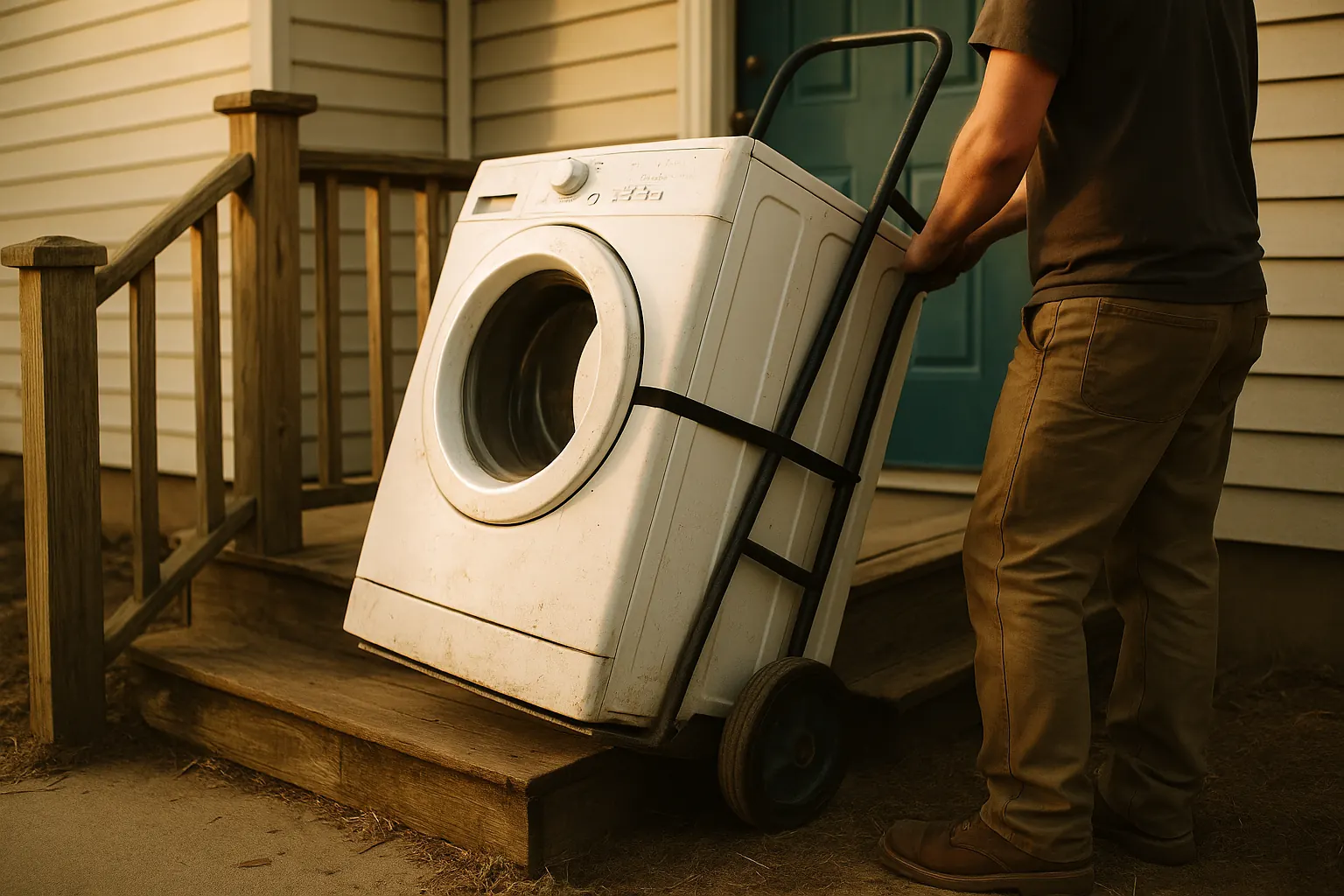
Worth-it includes the last hundred feet: a store that delivers, installs, and hauls the dead unit away is often the cheaper total even at a higher tag.
Price the whole transaction, not the tag. Delivery runs $50 to $150 where it is not bundled, haul-away $20 to $75, and new fill hoses another $15 to $30, which together can close most of the gap between two stores' stickers. The landed-cost arithmetic, channel by channel, is in cheapest way to replace a washer or dryer.
If the cash price of a solid used unit is still out of reach this month, the honest comparison of the financing routes (rent-to-own, store credit, buy-now-pay-later) is in rent-to-own vs. buying used vs. financing.
Sources
- National Association of Home Builders / Bank of America, Study of Life Expectancy of Home Components, 2007.
- usedappliancestores.com store dataset, 2026-07-15 build: 6,671 active listings; segment evidence counts; assessment funnel figures.
- DataForSEO (Google Ads search volume data), pulled 2026-07-10.