Last updated: 2026-08-03 · Written by the usedappliancestores.com data team. Supply data comes from our national dataset of 6,671 active store listings, checked 2026-07-15.
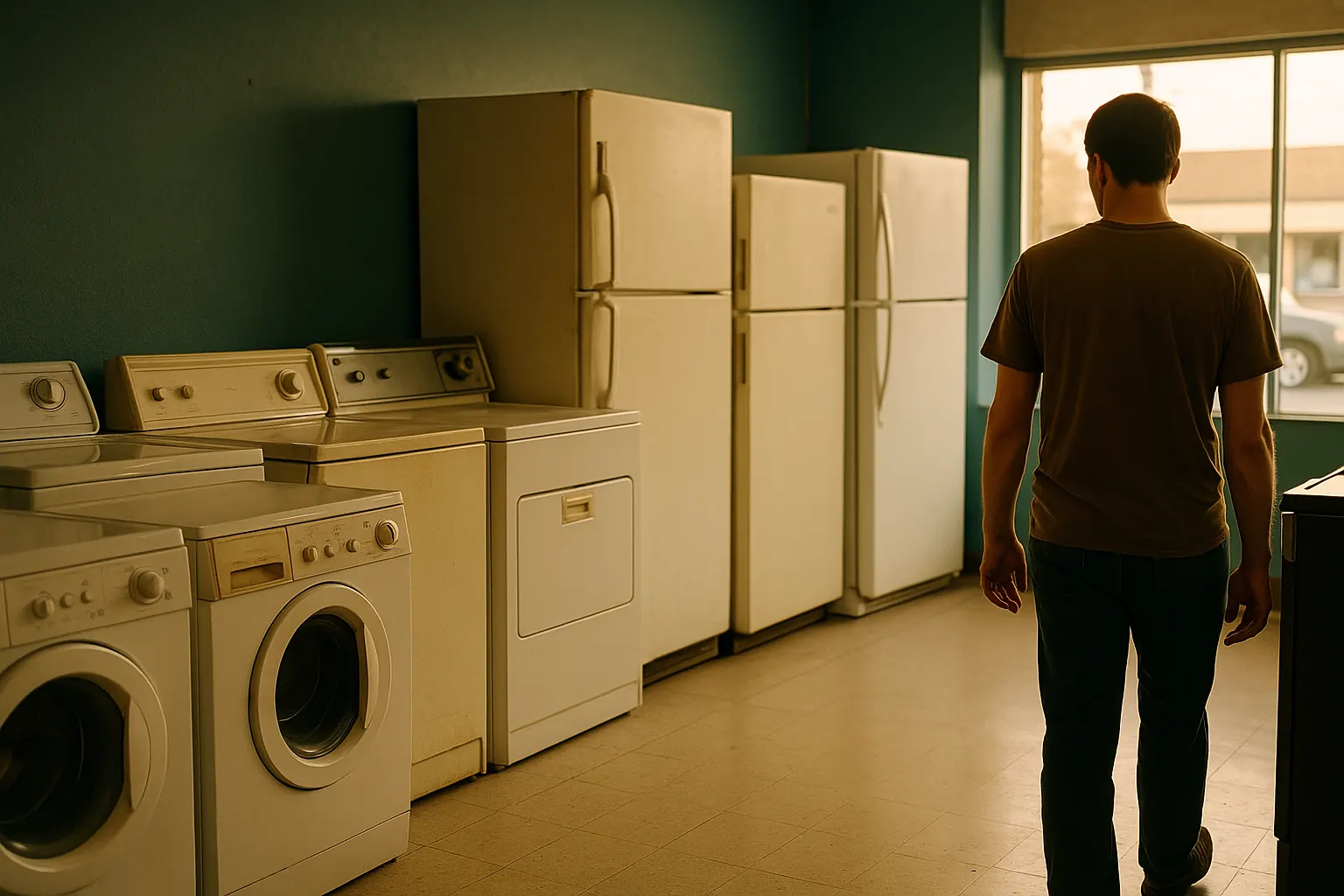
A used appliance's fair price is a function of three inputs: the new price of a comparable model, the fraction of expected life the unit has left, and the coverage the seller writes down. This page gives you that formula with the lifespan data to run it, working price anchors for each appliance type, and our state-level supply data. One honest note up front: we do not yet publish observed price data. Our quarterly Used-Appliance Price Index, computed from prices independent stores publish on their own websites, is in development and will appear at the Used-Appliance Price Index with its full methodology. Until it ships, no invented "average price" table appears here; a site publishing precise used-appliance price averages without a stated data source is guessing.
What sets a used appliance's price?
Fair used price ≈ (price of a comparable new model) × (remaining expected life ÷ total expected life), adjusted for the written guarantee.
Remaining life comes from the unit's age against the National Association of Home Builders' Study of Life Expectancy of Home Components (2007), the most-cited public lifespan dataset:
| Appliance | Expected lifespan | Age at which half the value is consumed |
|---|---|---|
| Dishwasher | ~9 years | ~4.5 years |
| Washing machine | ~10 years | ~5 years |
| Freezer | ~11 years | ~5.5 years |
| Refrigerator | ~13 years | ~6.5 years |
| Dryer | ~13 years | ~6.5 years |
| Electric range | ~13 years | ~6.5 years |
| Gas range | ~15 years | ~7.5 years |
Worked example, with the arithmetic exposed: a 6-year-old dryer against a $600 comparable new model carries (13 − 6) ÷ 13 ≈ 54% of its life, so ~$320 is the neutral anchor before adjustments. A 90-day written parts-and-labor guarantee justifies paying above the anchor. "As is" justifies paying below it. The manufacture date is decodable from the serial number on the rating plate, and the store should read it to you; a seller who will not is pricing on your ignorance of the one number that matters.
The two adjustments that matter most
- Written guarantee. A store that tests units and backs them in writing is selling a different product from an as-is seller. Pay for it. The verification checklist in how to verify a used-appliance store tells you which stores clear the bar, and used-appliance warranty rights by state covers what the law adds on top in your state.
- Category repair economics. A dryer is cheap to repair, so consumed life costs less. A refrigerator's compressor or sealed-system failure typically totals the unit, so late-life fridges deserve steep discounts. The full repair-vs-replace thresholds are in appliance lifespan and repair vs. replace.
Working anchors by appliance type
These are the formula's outputs against typical posted big-box prices for mid-range new models, not observed used prices. They are stated so you can check the arithmetic, and they will be replaced by measured figures when the index ships.
| Appliance | Typical mid-range new price | 5-year-old anchor | 8-year-old anchor | What moves the number most |
|---|---|---|---|---|
| Top-load washer | $550 to $750 | $275 to $375 | $110 to $150 | Bearing noise; suspension wear |
| Front-load washer | $700 to $1,000 | $350 to $500 | $140 to $200 | Bearing and door-boot condition |
| Dryer (electric) | $500 to $800 | $310 to $490 | $190 to $310 | Almost nothing; dryers age slowly |
| Refrigerator (top-freezer) | $700 to $1,000 | $430 to $615 | $270 to $385 | Compressor run quality, door seals |
| Refrigerator (french-door) | $1,500 to $2,500 | $920 to $1,540 | $575 to $960 | Ice maker and sealed-system history |
| Range (gas) | $700 to $1,100 | $465 to $735 | $325 to $515 | Igniter condition; cosmetic state |
| Dishwasher | $500 to $800 | $220 to $355 | $55 to $90 | Age; late-life dishwashers are near-zero |
Read the last column before the numbers. A dryer's anchor barely falls with age because the machine is simple and every wear part is cheap to replace. A dishwasher's anchor collapses because at nine expected years, an 8-year-old unit is nearly spent. The formula prices the machine's future, not its past.
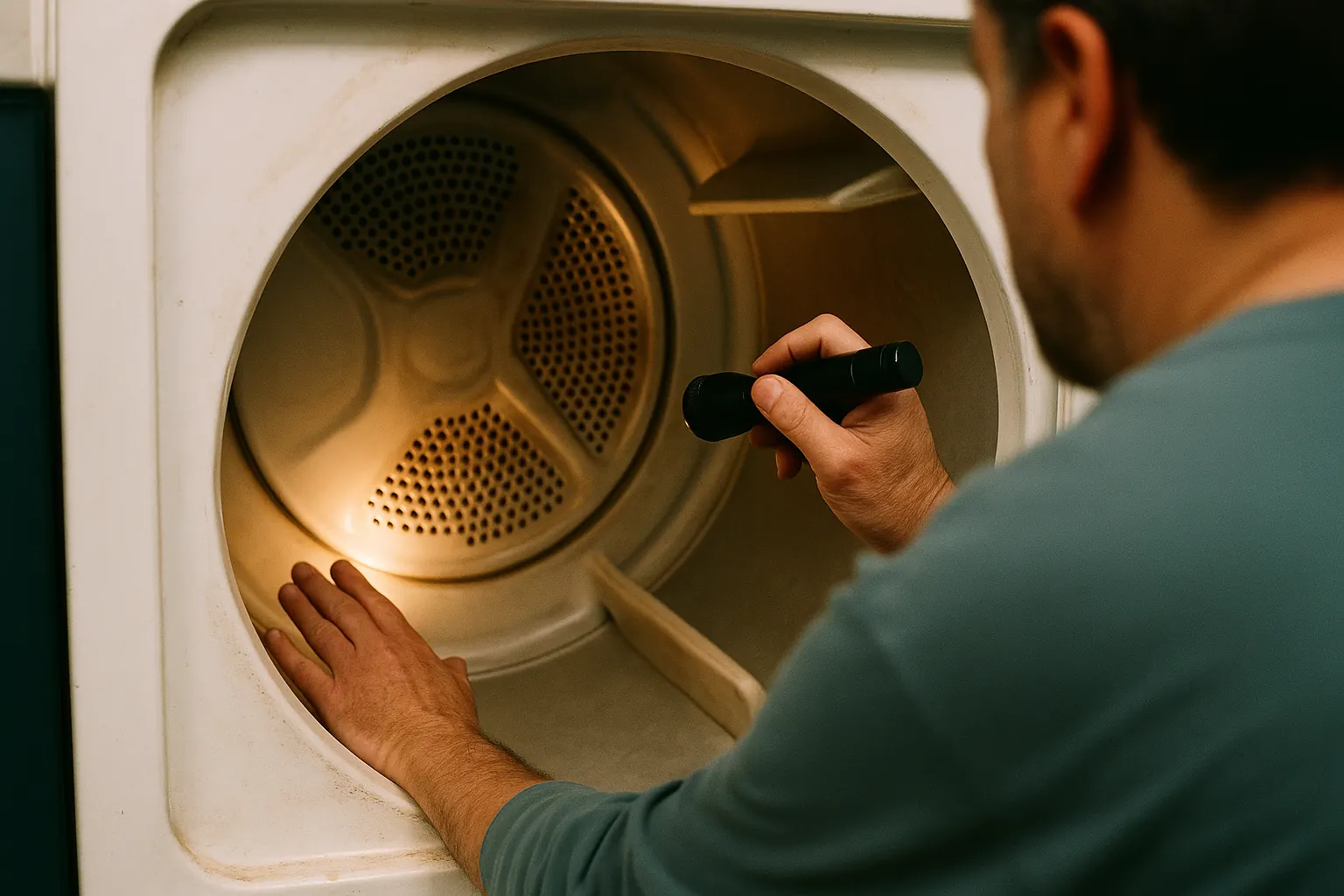
Two minutes with the drum, the seals, and the manufacture plate tells you which end of the anchor range a unit deserves.
The anchor also assumes the unit passes a basic inspection: drum spins clean, seals intact, no rust at the water paths, honest manufacture date. The inspection routine that supports these prices, machine by machine, is in how to inspect a used appliance before buying. A unit that fails a check does not get a smaller discount. It gets a different category, because you are no longer buying remaining life, you are buying a repair project.
Where used-appliance supply concentrates, from our data
Local supply shapes local prices: more competing stores means more inventory turnover and more room to negotiate. These are active, checked store listings in our national directory by state (top 15 of 51; full table on the browse checked stores by state):
| State | Active store listings | Listings with used-inventory evidence |
|---|---|---|
| California | 839 | 201 |
| Texas | 614 | 221 |
| Florida | 566 | 205 |
| New York | 340 | 61 |
| Illinois | 251 | 84 |
| Pennsylvania | 245 | 62 |
| North Carolina | 228 | 80 |
| Ohio | 224 | 73 |
| Michigan | 207 | 60 |
| Tennessee | 187 | 64 |
| Georgia | 186 | 56 |
| Indiana | 161 | 48 |
| Massachusetts | 149 | 20 |
| New Jersey | 148 | 25 |
| Alabama | 128 | 42 |
Two patterns worth noting. Sun-belt and midland states show the highest rates of explicit used-inventory evidence relative to their listing counts: Texas at 36% (221 of 614), Florida at 36% (205 of 566), North Carolina at 35% (80 of 228), Alabama at 33% (42 of 128). Northeastern states show the lowest: New York at 18% (61 of 340), New Jersey at 17% (25 of 148), Massachusetts at 13% (20 of 149), where general appliance dealers dominate the store mix. If you are pricing a used unit in a thin-supply state, the negotiating power sits with the seller, and the formula above becomes your only anchor.
At the metro level, our largest store concentrations as of the 2026-07-15 build are Los Angeles (123 listings), New York (117), Houston (113), Dallas (95), Tampa (92), and Chicago (90). Browse any metro from its state page, for example Houston.
The landed price is the real price
The tag is not the cost. A used appliance becomes useful when it is in your home, connected, and the dead one is gone, and each of those steps has a price that varies more between stores than the appliance itself does.
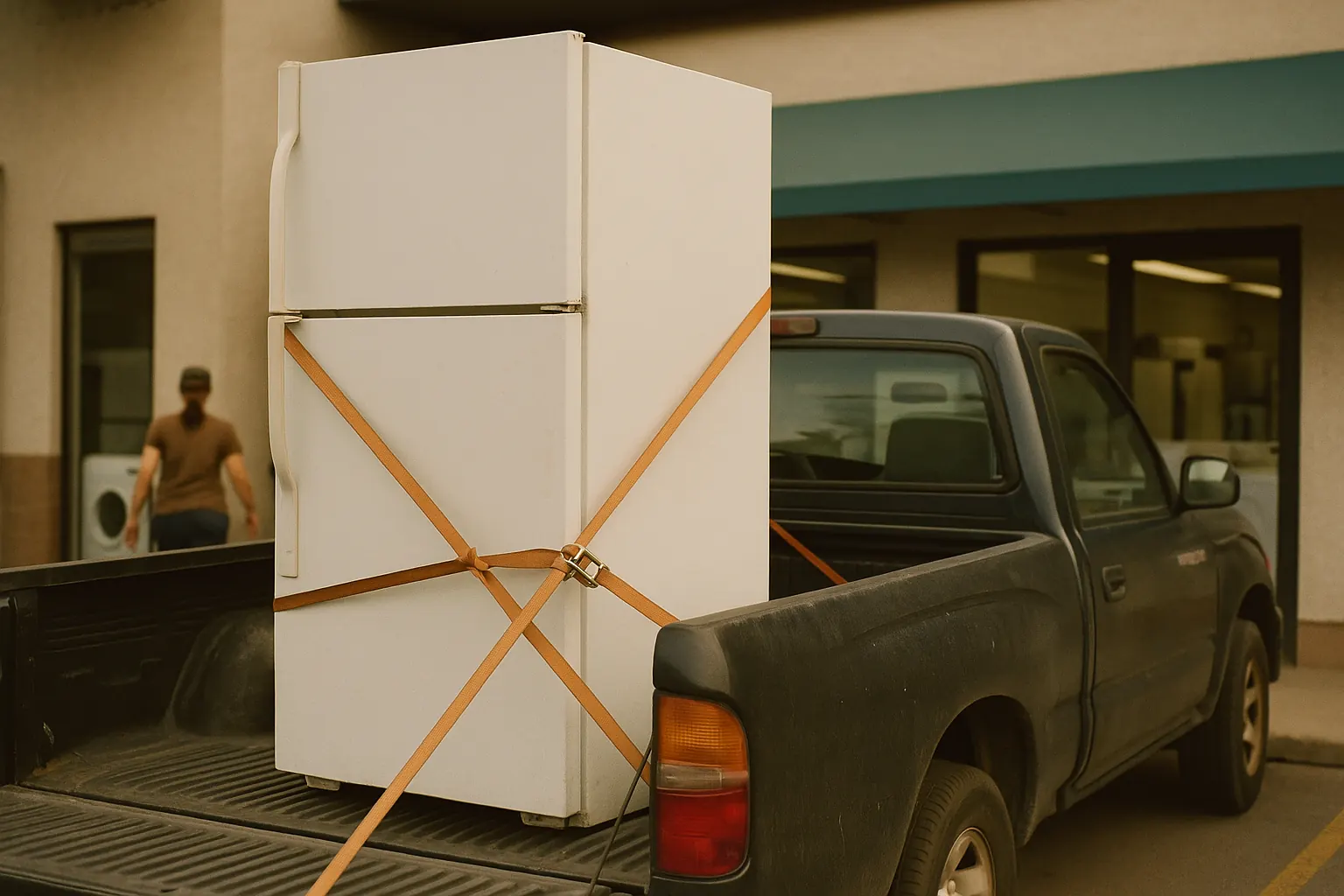
If you can move it yourself, the delivery line goes to zero and the negotiating math changes.
| Cost line | Typical range | How to zero it |
|---|---|---|
| Delivery | $50 to $150 | Borrow a truck; fridges ride upright, secured |
| Haul-away of the dead unit | $20 to $75, sometimes free with delivery | Municipal bulk pickup, scrap collectors |
| New fill hoses / vent kit / cord | $15 to $60 | Reuse only what is undamaged; never reuse old washer hoses |
| Installation and leveling | $0 to $100 | Washers and dryers are a two-person DIY job |
Ask for the landed number in one question: "delivered, installed, old one gone, what am I paying?" Stores that bundle these lines are often cheaper in total than a lower sticker with every service billed separately. The full landed-cost walk, channel by channel, is in cheapest way to replace a washer or dryer.
One practical note from our dataset: only 1,902 of 6,671 stores, 28.5%, publish a phone number on a checkable public listing, and only 3,199, 48.0%, have a live website at all (checked 2026-07-15). Call before you drive, and if a store cannot be reached in advance, price that risk into the trip.
When prices move: the used market's calendar
Used prices track supply waves, and the waves are predictable. Moving season (late spring through early fall, and every month-end) floods the marketplace channels with must-sell-today units and pushes dealer acquisition costs down, which reaches their floors a few weeks later. New-model rollouts (fall for kitchen lines, spring for laundry) push freight-damage and clearance stock into outlets. January is the quiet-floor month, when dealers holding full inventory against thin traffic negotiate like they mean it. None of this outruns an emergency, and the cost of waiting weeks with a dead machine (laundromat fees, spoiled-food risk) usually eats a seasonal discount, which is the honest trade stated in cheapest way to replace a washer or dryer. For the non-emergency purchase, though, the calendar is worth 10% to 20%, and the strongest version stacks it: a January visit to a dealer's full floor, formula in hand.
Region moves prices the same direction as season. The state table above shows why: thin-supply states hand sellers the pricing power, and dense metros with dozens of competing floors hand it to you. The same 6-year-old washer defensibly prices $60 apart between Houston (113 floors in our data) and a one-dealer county, and neither number is wrong; the formula's output is the anchor, and local supply sets how far from it the market can drift.
Reading an asking price
Three patterns tell you whether an asking price is an informed number or a hopeful one:
- A price with no model number is not a price. The formula requires a comparable new model. A tag reading "washer, $299" with no model or manufacture date is asking you to price a mystery. Stores that know their inventory list both.
- A "refurbished" premium requires a repair record. Refurbished pricing sits above used pricing because specific parts were replaced and tested. No record, no premium; the definitions and the tells are in used vs. scratch-and-dent vs. refurbished vs. open-box.
- An as-is discount has a floor. "As is" transfers all repair risk to you, and the discount should reflect the worst realistic repair, not a token $25. On a refrigerator the worst realistic repair is a sealed-system failure that totals the unit, which is why as-is fridges deserve the deepest discounts of anything on the floor.
Negotiate from remaining life, out loud. "This washer is seven years old against a ten-year life, so it has about 30% of its value left, and comparable new is $600" is a sentence that moves prices, because it shows the seller you are pricing the machine and not the paint.
Run the numbers before you drive
- Identify the model and manufacture date from the rating plate; have the store read it to you by phone if the listing does not state it.
- Price the comparable new model at two retailers.
- Run the formula with the lifespan table, and place the unit against the working anchors above.
- Adjust for the written guarantee and the category's repair economics.
- Ask for the landed price: delivered, installed, haul-away included.
- Check local supply on your browse checked stores by state state page; thin supply means the anchor price, not the asking price, is your number.
Sources
- usedappliancestores.com store dataset, 2026-07-15 build: 6,671 active listings; state, metro, used-inventory-evidence, website-liveness, and phone-coverage counts.
- National Association of Home Builders / Bank of America, Study of Life Expectancy of Home Components, 2007.
- New-model price ranges: posted big-box retail ranges for mid-range models, checked 2026-07-30; anchors are computed from the formula, not observed used prices.
- DataForSEO (Google Ads search volume data), pulled 2026-07-10.